Start with the system’s function
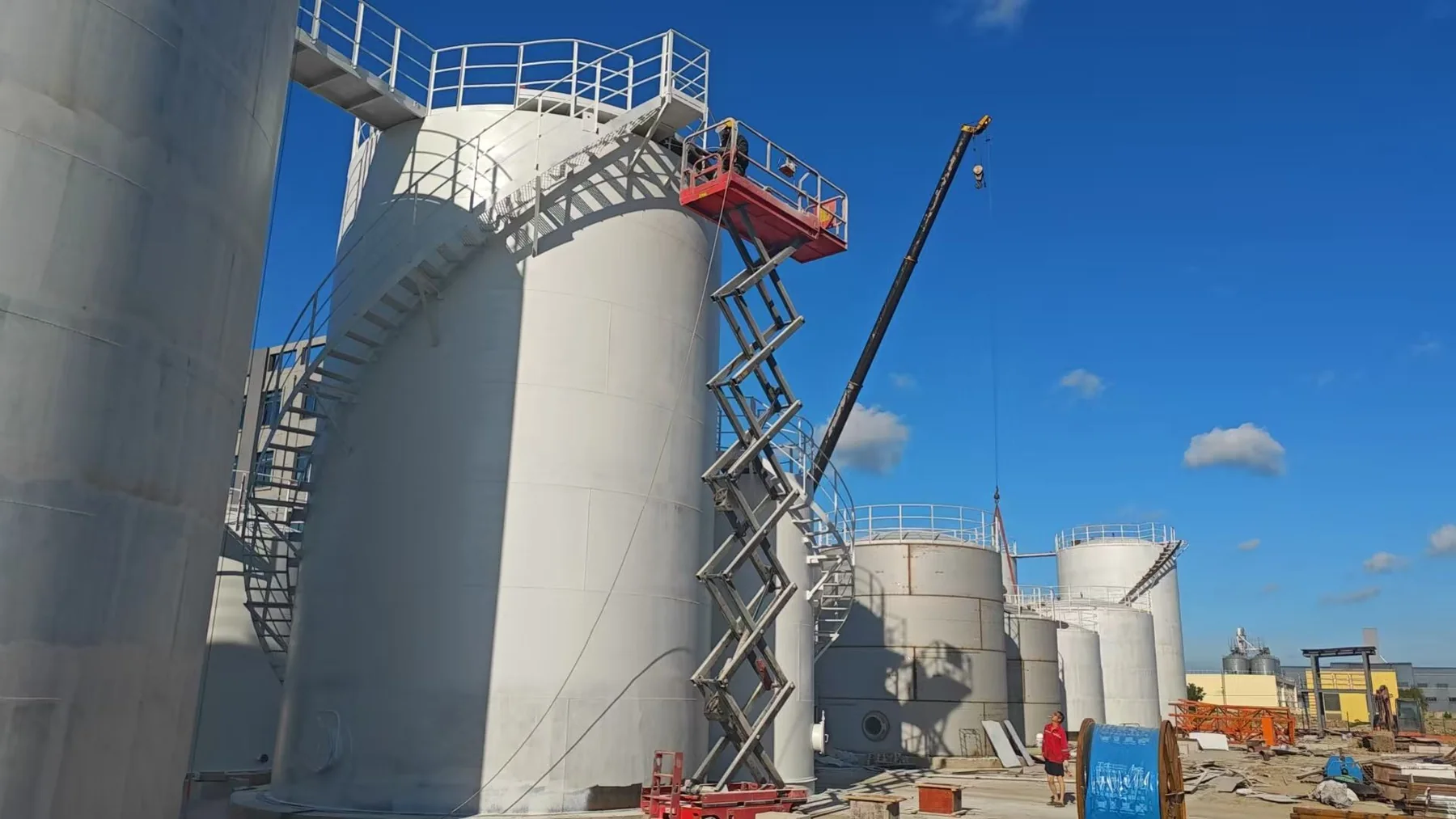
A refuelling unit combines storage and dispensing with control and maintenance access. An industrial tank starts with the stored medium and the process it serves. Before comparing prices, define whether the requirement is a fleet or construction refuelling module, a storage tank, or a facility integrating several systems. This decision shapes engineering, auxiliary equipment and responsibilities.
Align capacity and operation
The reference module range includes 10, 15, 20, 25, 30, 40 and 50 m³. These values do not replace working-volume, compartment and fuel definitions. Relate consumption to replenishment frequency and dispensing demand. For tanks, specify geometric and working volume, temperature, pressure and protection or insulation requirements. Two quotations declaring the same volume can describe different scopes.
Resolve the site interfaces
Record foundations, transport and lifting access, vehicle circulation and unloading, piping, drainage and utilities. For modules, confirm voltage, frequency, earthing, controls and destination requirements. For tanks, define nozzle orientation, connections and erection interfaces. An original electrical configuration and equipment documentation do not automatically establish acceptance in every country.
Compare a delivery matrix
Ask each proposal to identify equipment, accessories, civil works, fabrication or site erection, inspections, tests, training and documents. Clarify what the manufacturer supplies and what the owner, installer and adviser coordinate. An outstanding-input register allows progress without treating a selection assumption as a confirmed contractual condition.
Prepare a brief covering medium, working volume, operation, site and scope before comparing quotations.
Design criteria and data are confirmed for each project. This content supports scope definition and does not replace the relevant engineering review.
Modular refuelling unitsDiscuss your project